


Two weeks ago, I watched the 72-hour Grok Bot Galaxy livestream.
I never ever thought a 72-hour livestream would be interesting, but this was as addictive as binge-watching Star Trek! Kudos to the Grok Bot team for putting together such an engaging event—and impressively, for a product that launched just over a month ago and was started only three months ago!
Beyond learning a number of useful tips and tricks, one thing that struck me was a profound shift in how to think about software. This was captured elegantly in a quote from Roman Ugarte of the Grok Bot team.
You just need to ask the question of what you would want from a human teammate, and can we push AI to behave in a similar way?
In some sense, this is a trivial comment. Of course we want our software systems to be easy to use! But this really represents a fundamental shift.
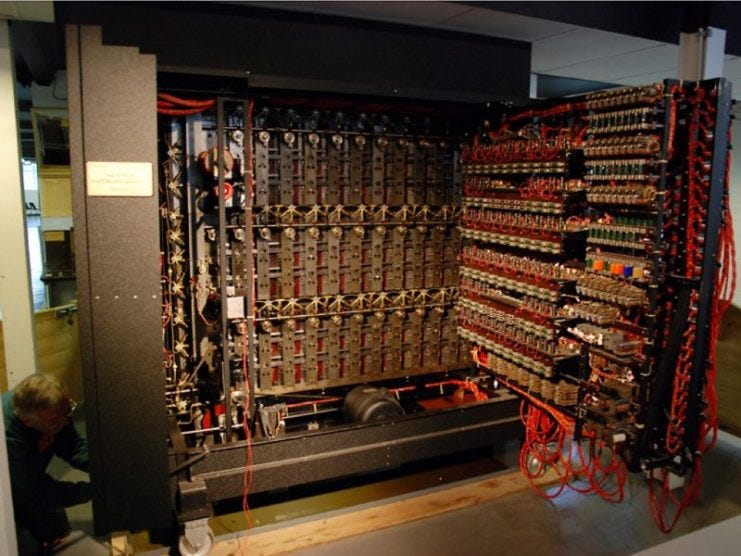
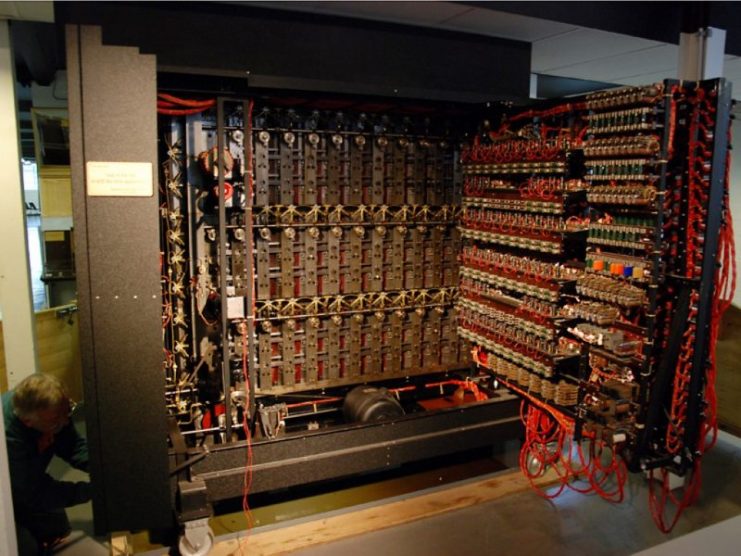
To see this, consider the history of computer interfaces. The first computers, like “Bombes,” built by Alan Turing during World War II to break the German Enigma encryption machine, required setting hundreds of dials by hand. Punch cards came later and, while better than manually setting dials, were still incredibly tedious (especially if you made an error!).
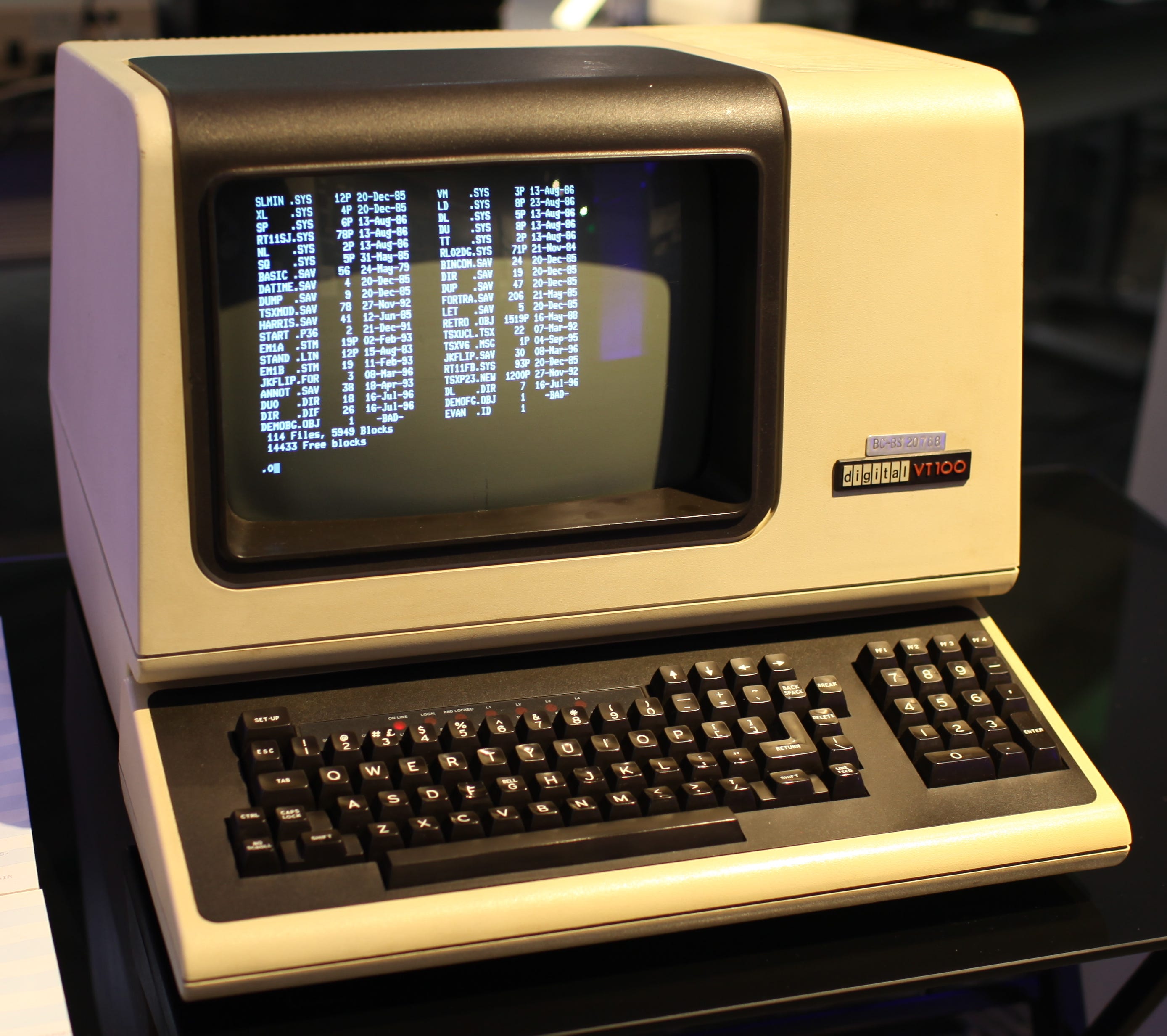
The first real breakthrough came in the terminal UI—the VT100 was a popular interface for mainframes and the like. For the first time, you could just type what you wanted to give the computer. A huge step up from punch cards!

The graphical user interface, popularized by Microsoft Windows and the Macintosh, was yet another step forward. “Just point and click!”
And today, with Siri, ChatGPT voice, and so on, it’s pretty common to just talk to the computer as well.
While each of these UI improvements was a significant step forward, they all rested on the same underlying mentality: the computer is a tool. The human operator has to tell it what to do.
For sure, you can tell it to do more stuff these days: in a punch card, you could say “add a to b”, and now you can say to ChatGPT “write me a term paper on George Washington”, but it’s still being driven by a human operator.
BUI
Enter BUI—the “bot UI”. This is the human colleague-based UI that Roman was describing.
In a BUI, humans are interacting with a colleague who just happens to be an AI. But you don’t think of it like that. It’s a lot more like hiring a human to help you, just one that is working 24x7.
As I wrote about in my last post, “My boss is a robot!”, I have over 100 of these bots working for me now! It’s dramatically changed how I work.
Importantly, it’s made me a lot more effective. Previously, it was a challenge to stay on top of the entire competitive landscape for all of the companies I work with. Now, I get a daily summary. Another bot manages my calendar and appointments. Other bots oversee my coding work. I still use Codex, Cursor, and Claude for most of my coding, but Grok Bots now manage and coordinate the tasks for those tools.
My favorite feature right now is Grok Bots' voice support. On nearly every drive I take, both long and short, I take advantage of the time to just talk to my Bot chief of staff (which I call Master Control, of course! In even a few minutes of chatting, I tell it everything I want done while I’m out at dinner or the movies.
It’s a really wild transformation of my life!

It’s really tough to go back to the “old” way of interacting with software!
Much like the browser opened up the $385+ billion Software as a Service market (as the browser became the universal platform that every SaaS vendor could target), I think Bots will open up a new Bots as a Service market.
Why would I want to work with conventional software with its endless forms and clicking around?
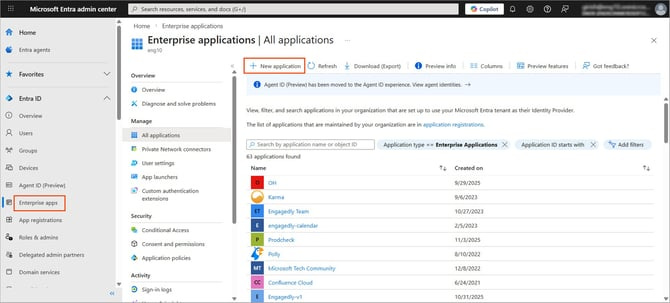
Why not just “hire” a bot to manage your IT security? Why not hire a bot to help with marketing? With sales? Literally, with anything you need to do in your business today?
That’s Bots as a Service!
The future
Of course, the $385 billion question is “what happens to existing SaaS companies?”
Clearly, if BUI really becomes the preferred user experience, existing SaaS companies will have to shift to that UI. Not all will manage the transition successfully (just as many software companies failed to navigate the SaaS transition successfully).
But will they just be replaced by the bots themselves? That could certainly happen, particularly for simpler SaaS companies—the more a product resembles filling out a form and storing it in a database, the more a bot could do that work instead.
However, many of these companies do much more sophisticated work behind the scenes, whether it's video analysis, financial modeling, or compliance assessments. In many cases, the accuracy is paramount. I would not want an AI hallucinating my financial statements, for instance!
Just because financial statements shouldn't be hallucinated doesn’t mean accounting software has to be as unpleasant to use as QuickBooks. A whole breed of new AI accounting software, from Rillet to Digits to Puzzle, allows for capabilities like continuous closing and chat-like interactions (e.g., “show me all of the overdue invoices above $10,000”). There’s really no reason anymore for month-long closes or numerous manual reconciliations; much of that can be handled automatically now.
Similarly, many SaaS systems require significant configuration and installation time to set up properly for a specific customer. Much of that can—and should!—be done automatically now.
As a simple example, one of the ways I bootstrapped my own Grok Bot configuration was to just ask my chief of staff bot:
“Look through all of my emails, understand what I do, and then suggest a suite of bots that can help me.”
It really was that simple!
Combine this with advances in AI development tools—it is getting easier and cheaper to build ever more capable software systems. What’s next that we haven’t even dreamed of yet?
Exciting times!